PORTFOLIO / LONDON, UK / MSc ROBOTICS & AI · BE MECHATRONICS (AIML MINOR)

Sajith Velmurugan Subalakshmi.

Mechanical & propulsion engineer

I design, simulate, and build propulsion and mechanical systems - from a magnetoplasmadynamic thruster as an atmospheric demonstrator, to a PLC operated air compressed engine. I'm looking for a graduate role in aerospace, propulsion or mechanical design.

01 — Profile

I'm an MSc Robotics & Artificial Intelligence graduate from Queen Mary University of London, with a BE in Mechatronics Engineering and a diploma in Mechanical Engineering.

My work sits where analysis meets hardware. For my final year project I modelled a magnetoplasmadynamic thruster in CAD and ran a full Ansys CFD study of the flow field, and I fabricated and fired a working demonstrator of it. For my MSc I moved from hardware to theory, deriving a parameter free analytical model of snap through in a bistable strip and validating it against finite element data.

Alongside that I've built a 3D printer from scratch and designed and fabricated competition go karts with my university racing team. I'm aiming for a career in aerospace and propulsion engineering.

LocationLondon, UK
FocusAerospace / Propulsion
QualificationsMSc · BE · Diploma
StatusSeeking graduate role
02 — Selected projects

Designed, analysed, and built.

Each project expands for the full engineering story - select "Learn more".

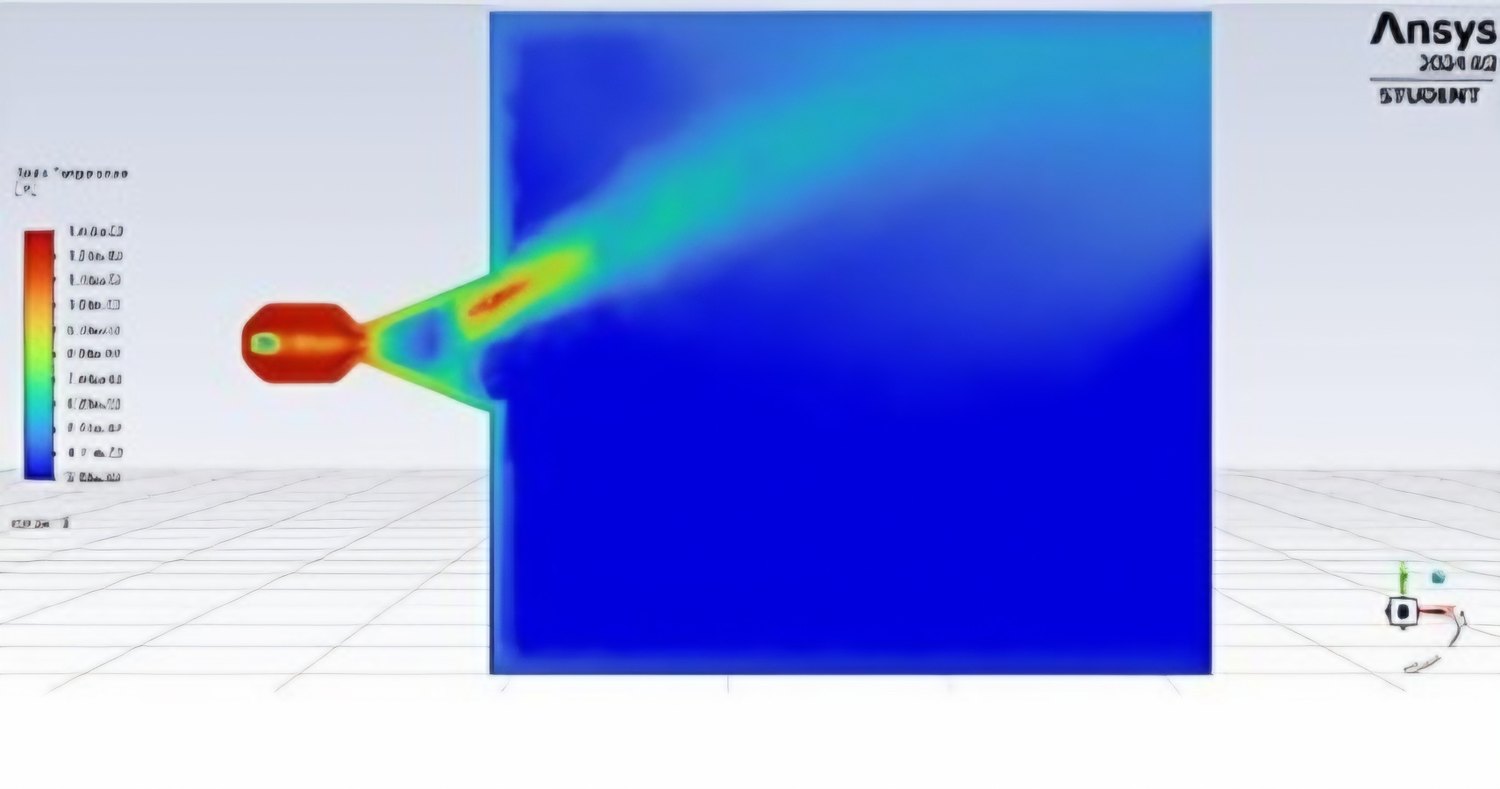
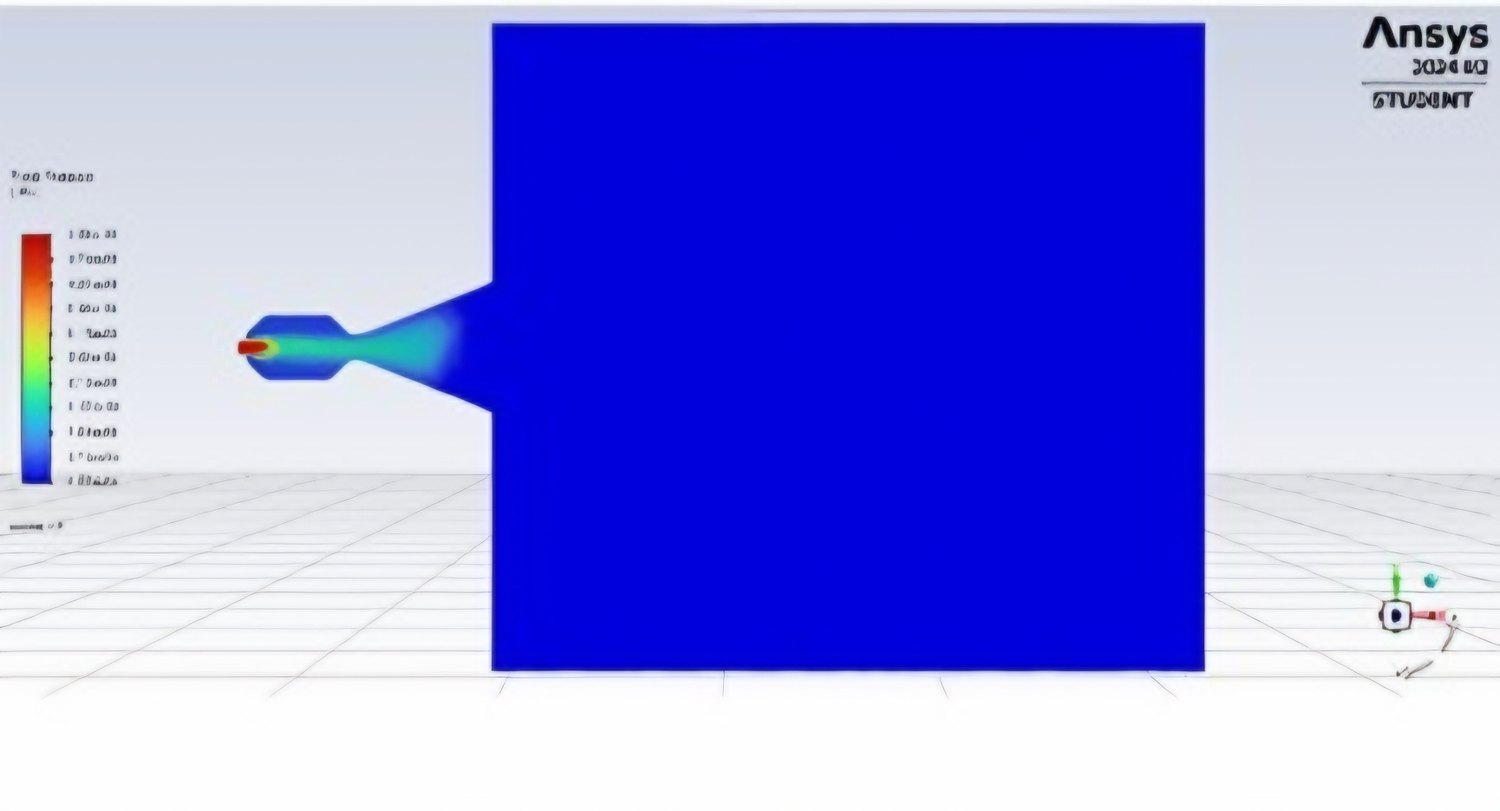
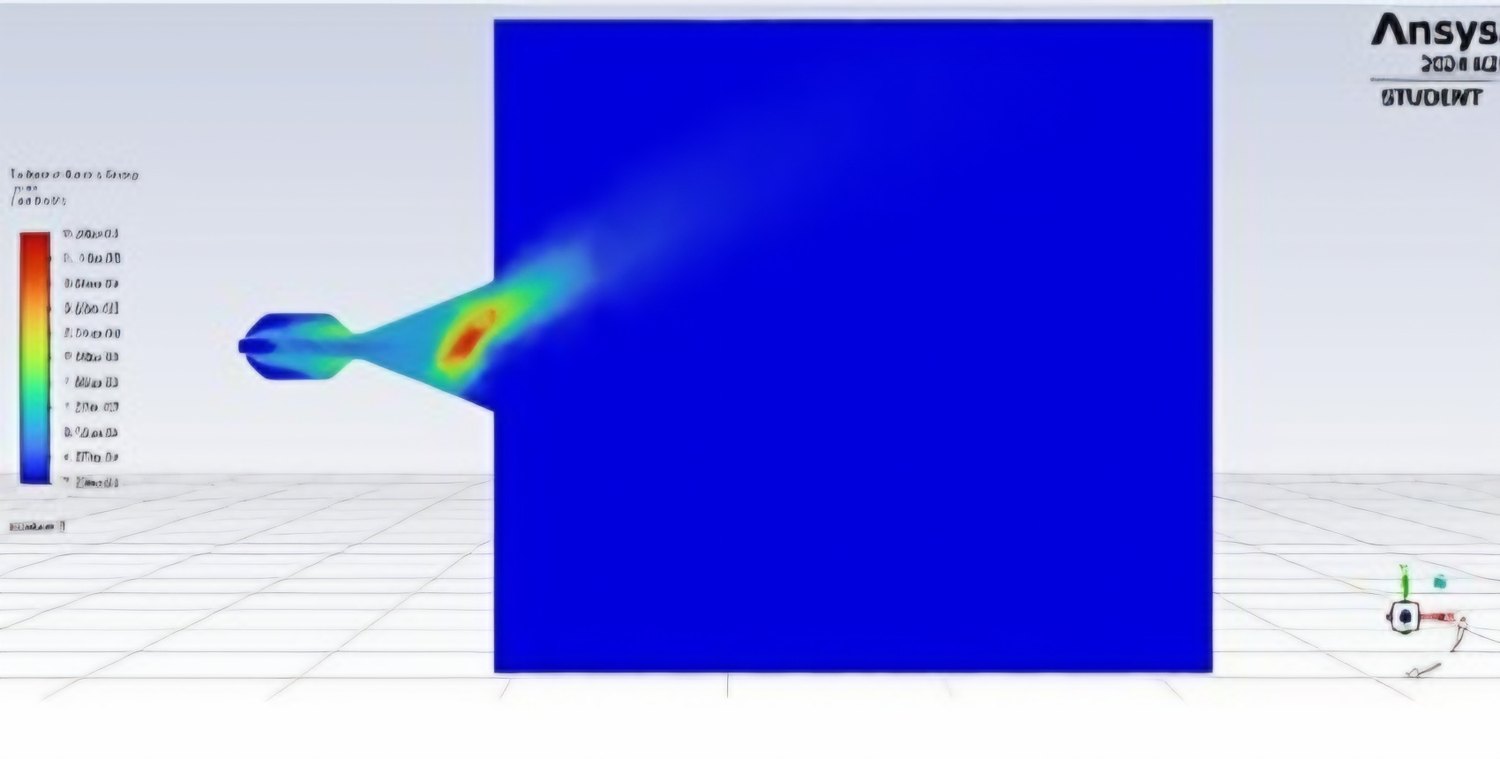
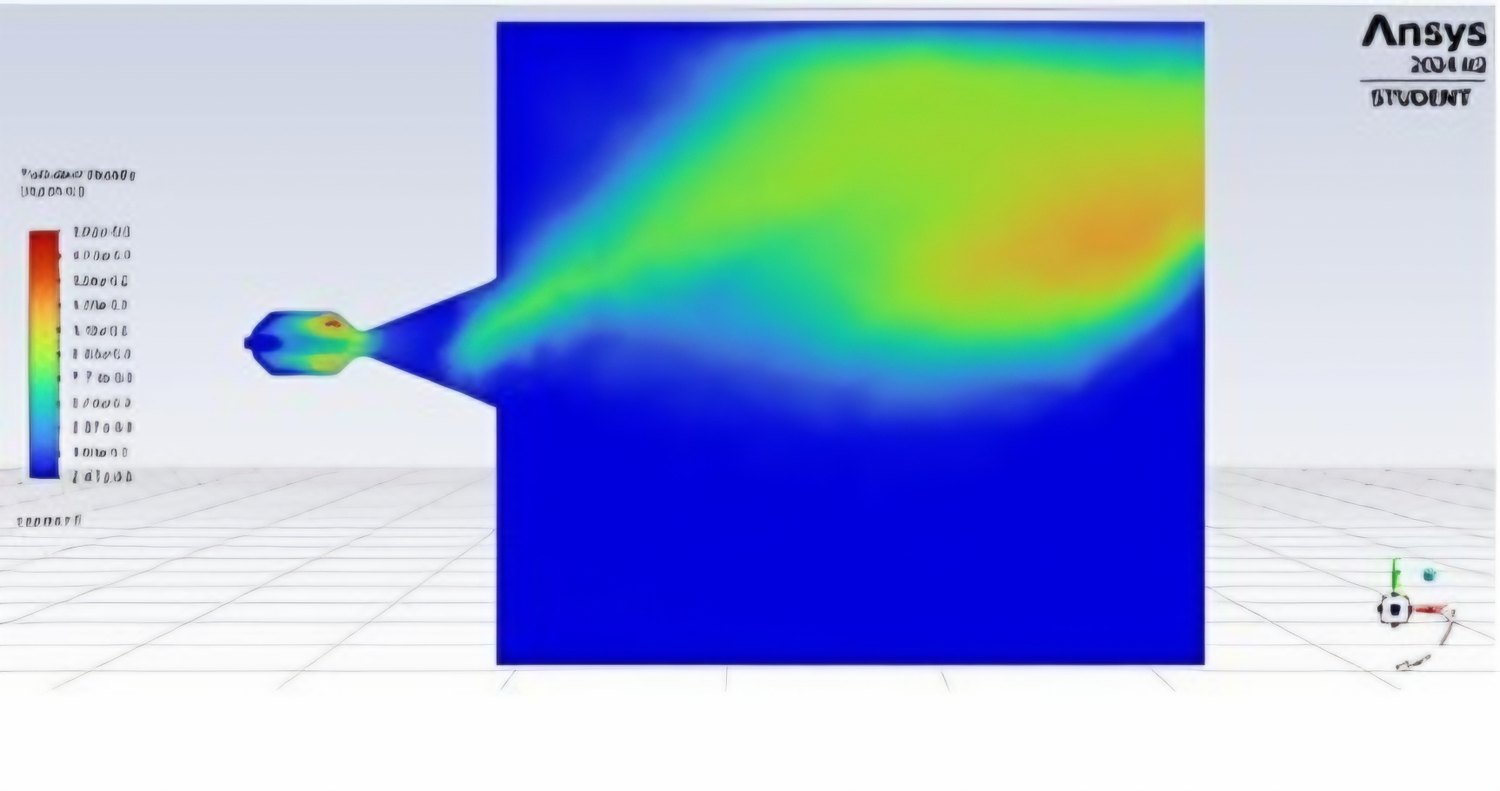
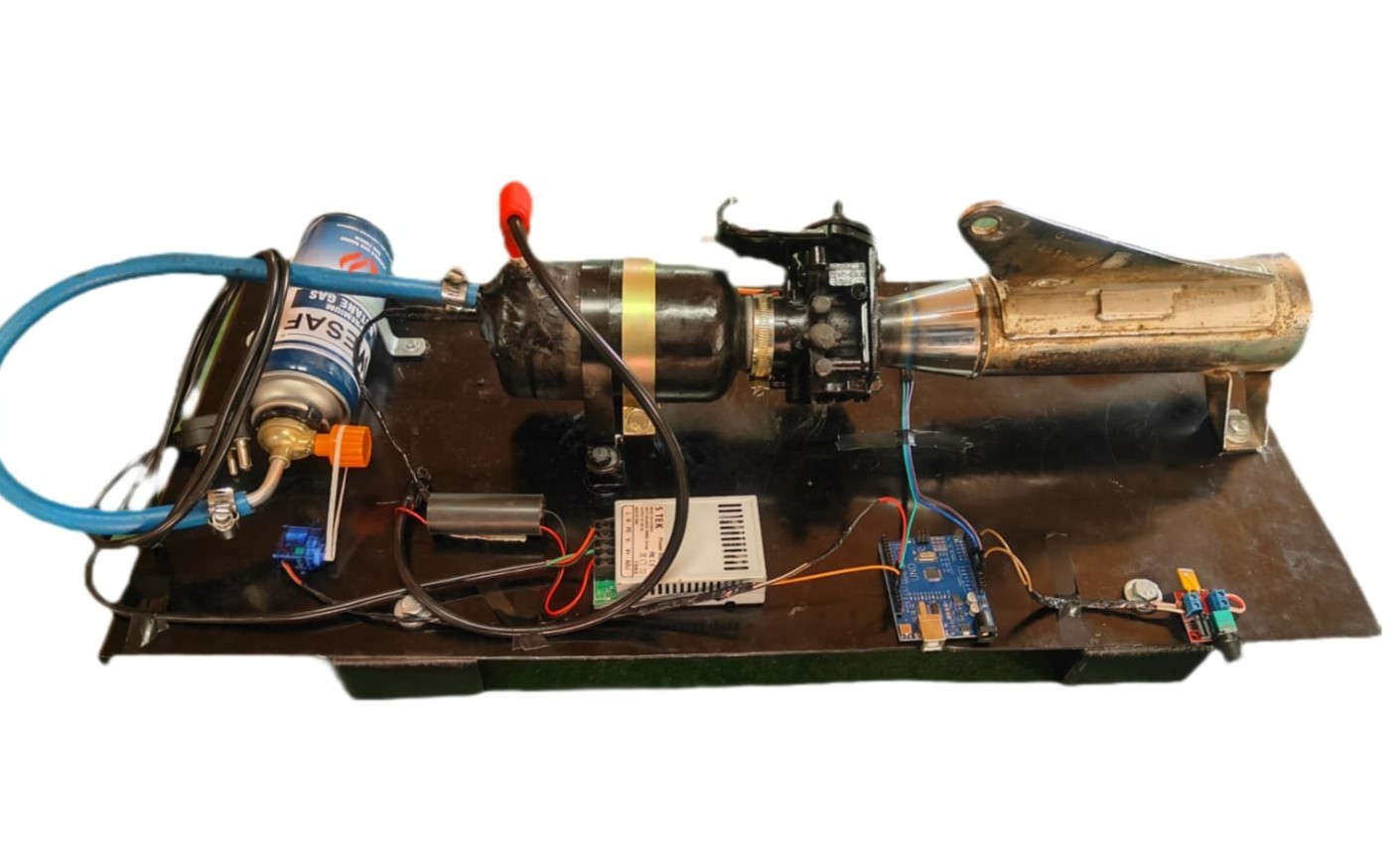
MPD thrusters accelerate ionised plasma with electromagnetic fields to produce high specific impulse, but conventionally operate only in the vacuum of space. The project ran in two phases.

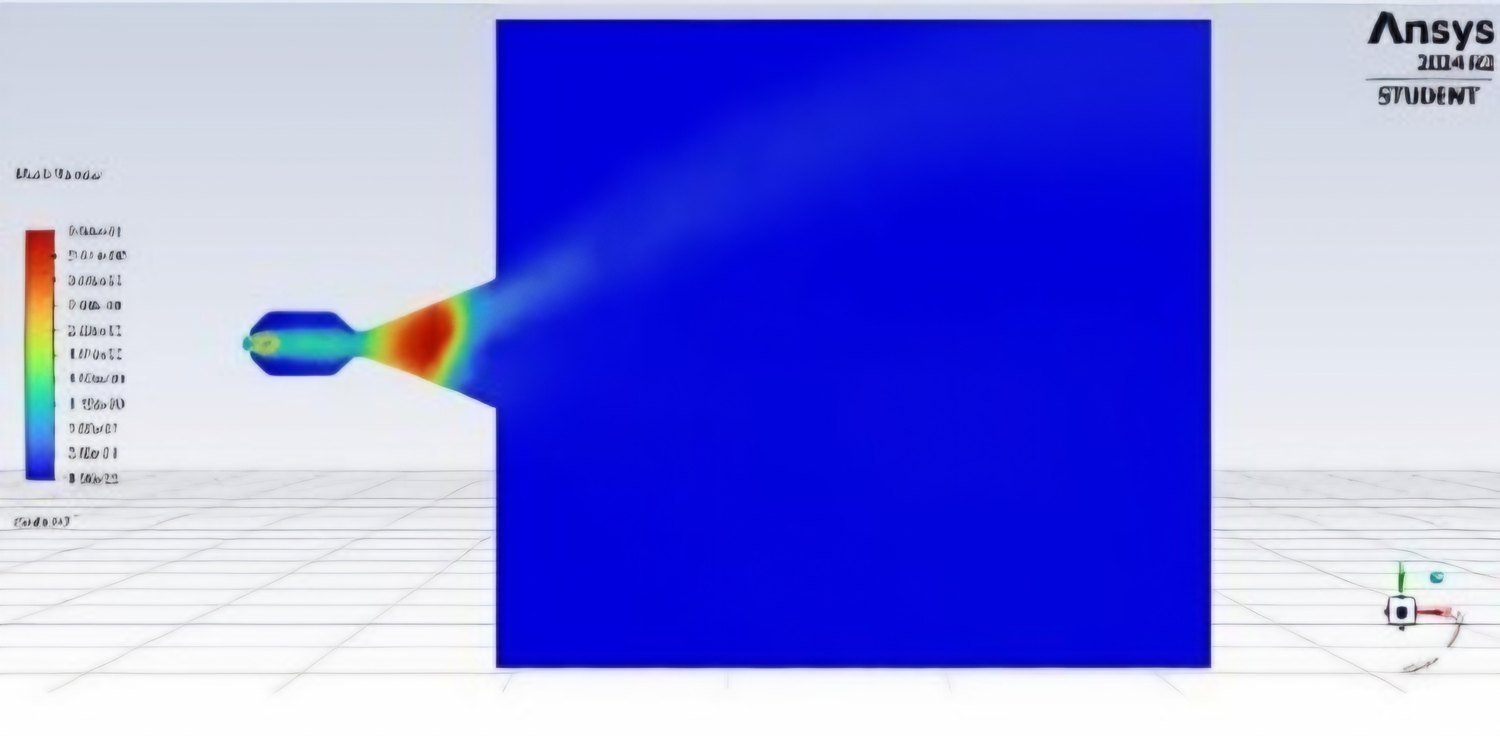
Phase one - design and analysis. I modelled the plasma chamber and converging diverging nozzle in CAD, then ran a full Ansys CFD study of the spacecraft configuration, analysing velocity flow, mass flow rate, static temperature, total pressure, turbulent kinetic energy and turbulent viscosity to evaluate thrust behaviour and keep component temperatures within safe structural limits. The results below are from this study, and were written up in the paper linked at the end of this section.

Phase two - atmospheric adaptation and hardware. After publication we revised the concept to work within the atmosphere, introducing a separate reaction chamber into the design. Butane was selected as the propellant, it ionises into a charged plasma and was the practical choice, since safely handling liquid hydrogen was beyond our university's facilities. I fabricated a physical demonstrator of the revised system from scratch and fired it.

Read the research paper →
CAD designAnsys CFDPlasma propulsionFabricationThermofluids

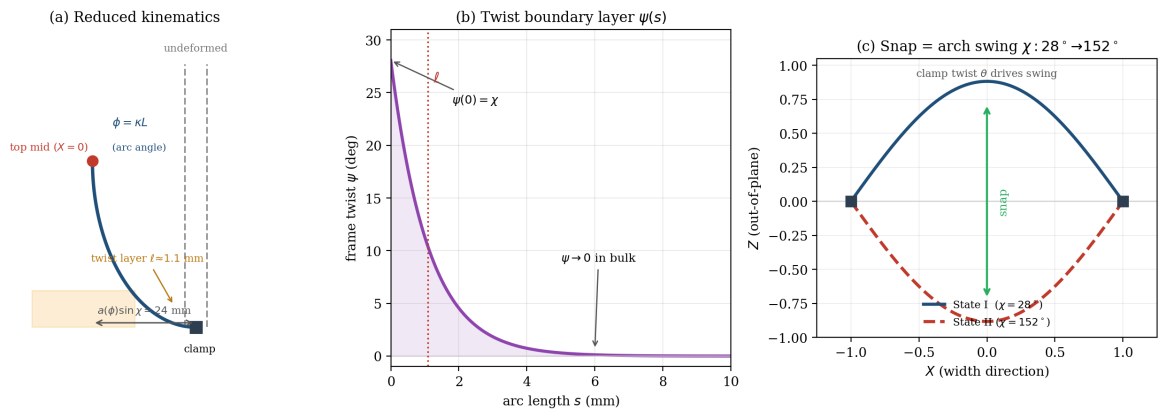
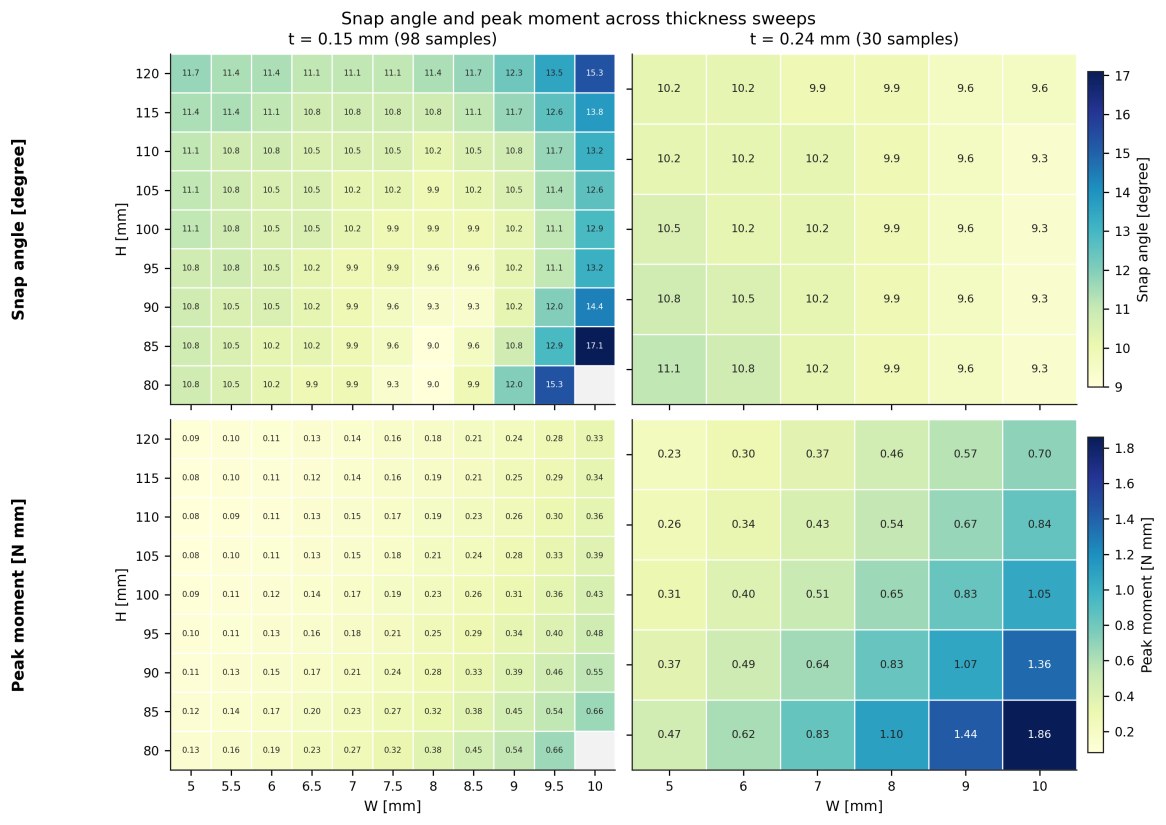
Soft actuators can release stored elastic energy far faster than their drive can supply it, by snapping between two stable states. Designing one means predicting the threshold at which that snap fires - and for a singly clamped preloaded strip, no closed form prediction existed. My MSc research derived one.

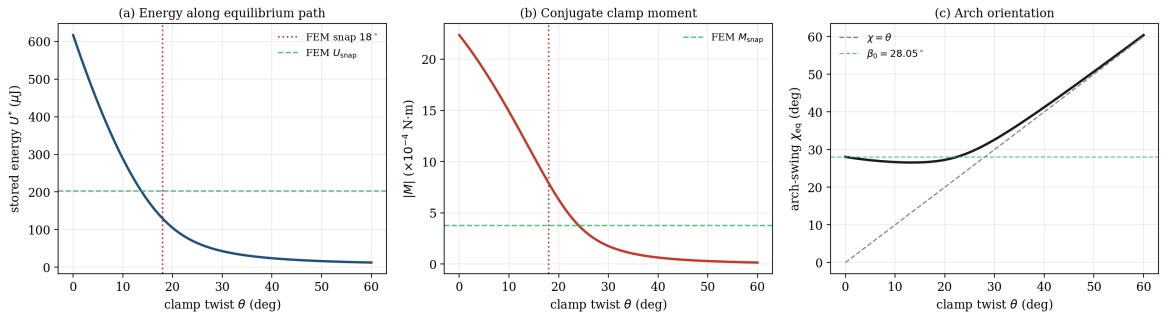
Working from Kirchhoff rod theory, I obtained the preloaded shape by constrained energy minimisation with a torsional boundary layer treated by matched asymptotics. Extending the model to the actuated stage turned on recognising that the imposed clamp rotation acts as a twist boundary condition rather than a bend or a tilt - the identification the whole model rests on, reached only after four earlier formulations were built and rejected. The envelope theorem then yields the actuation moment in closed form.

With zero fitted parameters, the model predicts the preloaded tip position to within 0.59% of a geometrically nonlinear shell FEM. Where it disagrees, it disagrees predictably: reducing the response to a single coordinate over constrains the structure, so the model must over predict the moment - and it does, by the anticipated factor. The energy functional coincides term for term with the published ribbon model of Chi et al. (Science Advances, 2022), extended here with a snap threshold analysis that work does not contain.

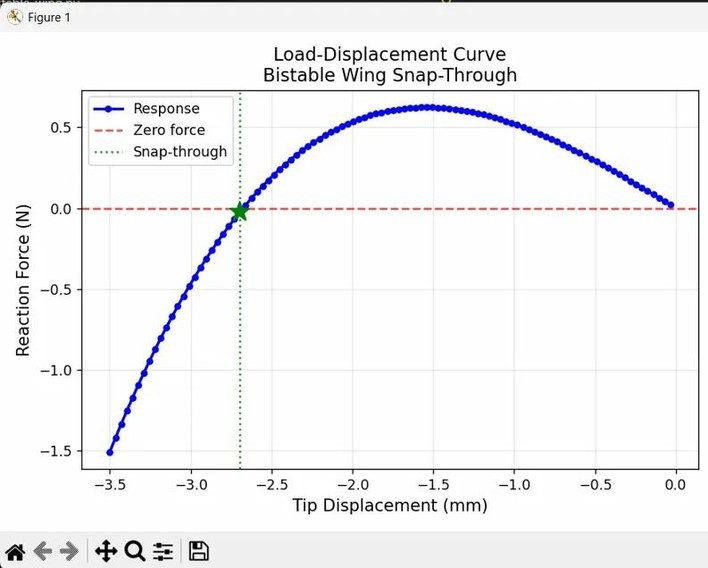
A differentiable finite element demonstrator in JAX captured the qualitative snap response, with the reaction force obtained by automatic differentiation of the strain energy.

Kirchhoff rod theoryMatched asymptoticsFEA validationSoft roboticsAnalytical modelling

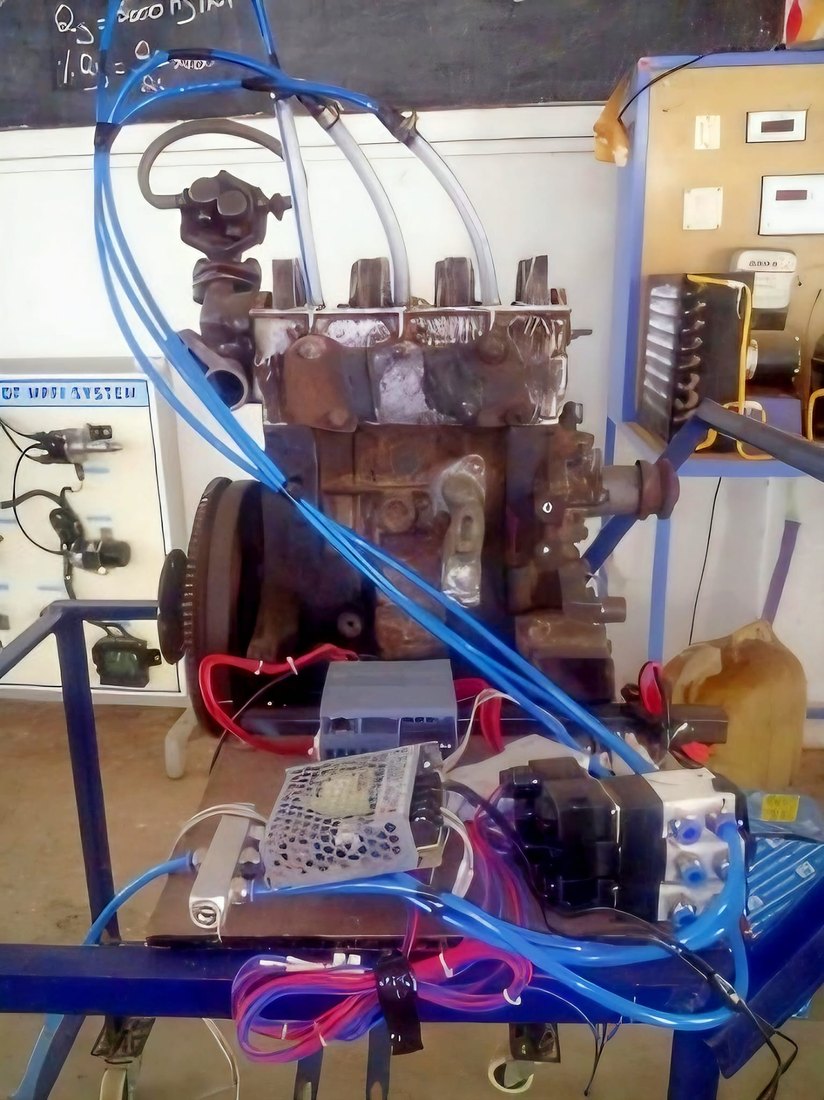
This project converted a four stroke engine to run entirely on compressed air rather than fuel - no combustion, and therefore no emissions. Compressed air is stored, heated through a nichrome coil so it expands, then fed via a divergent nozzle into the cylinder to drive the piston.

The system is automated with a PLC, a proximity sensor detects top dead centre at the cylinder head and signals the controller, which times a solenoid valve to release air at precisely the right point in the stroke. I built the rig and tested output power and efficiency against the theoretical model.

Read the research paper →
PLC automationPneumaticsThermodynamicsSensorsControl systems

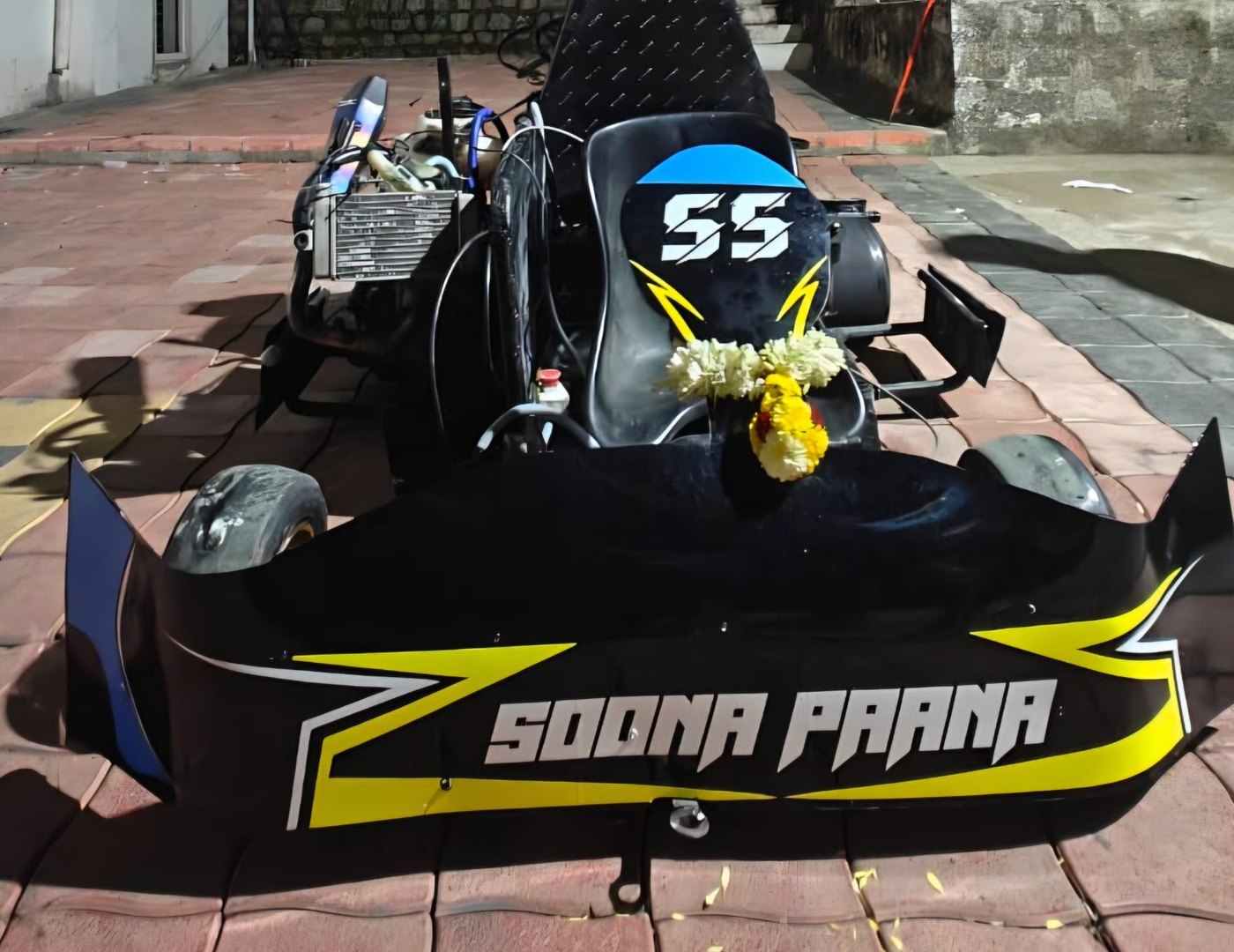
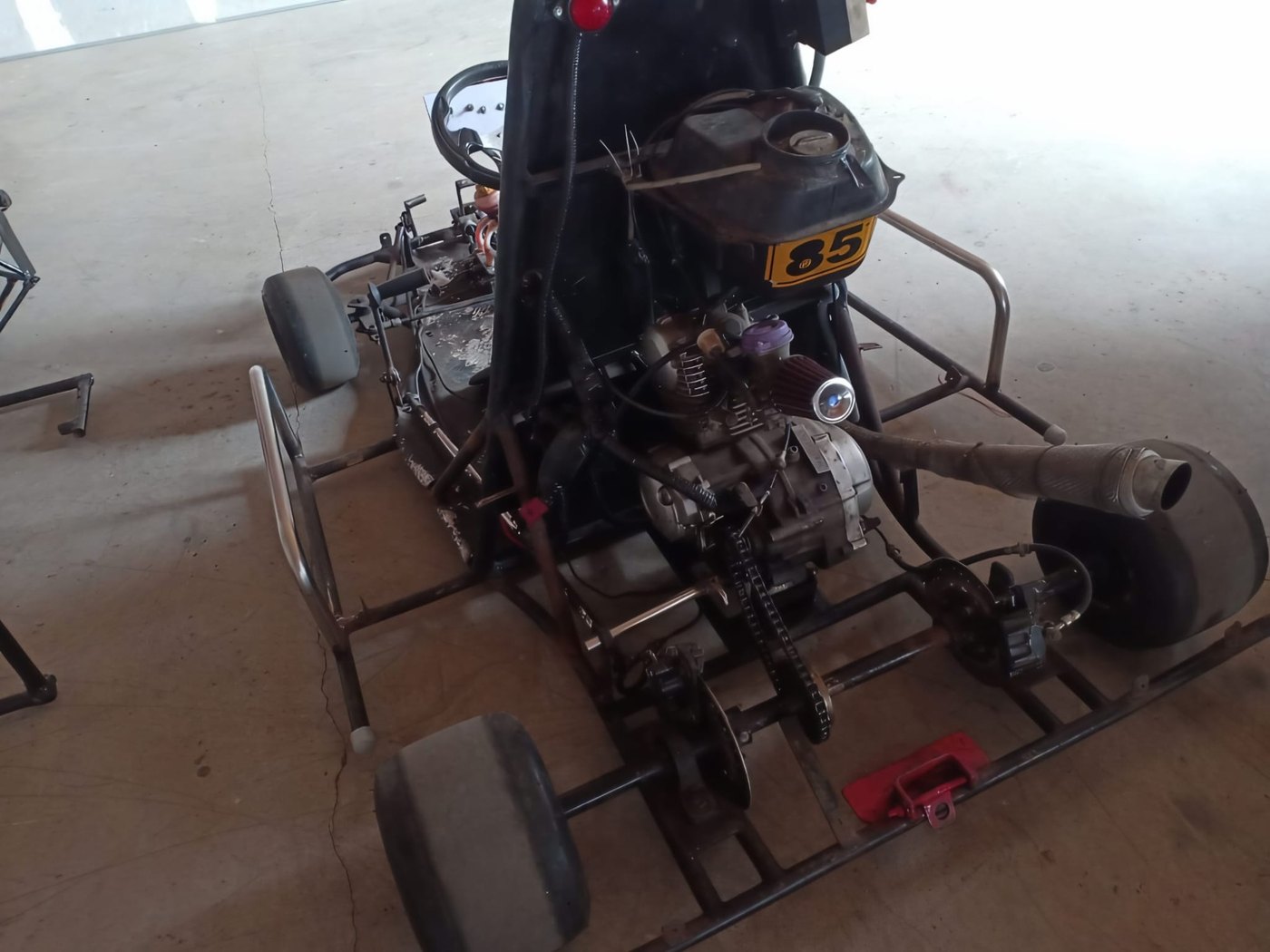
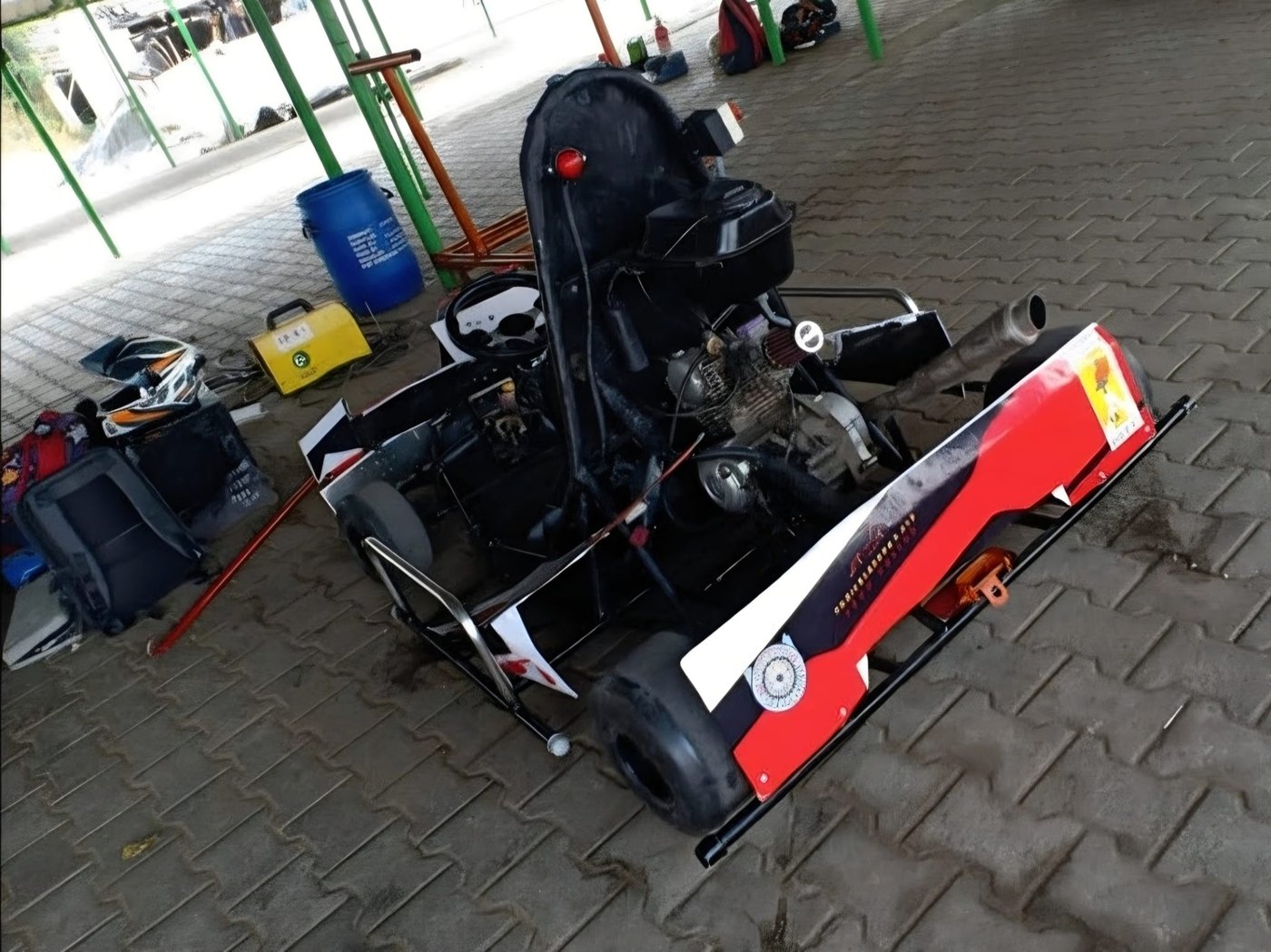
Over several seasons with university racing team I worked on three competition karts, each produced entirely from scratch rather than assembled from a kit.

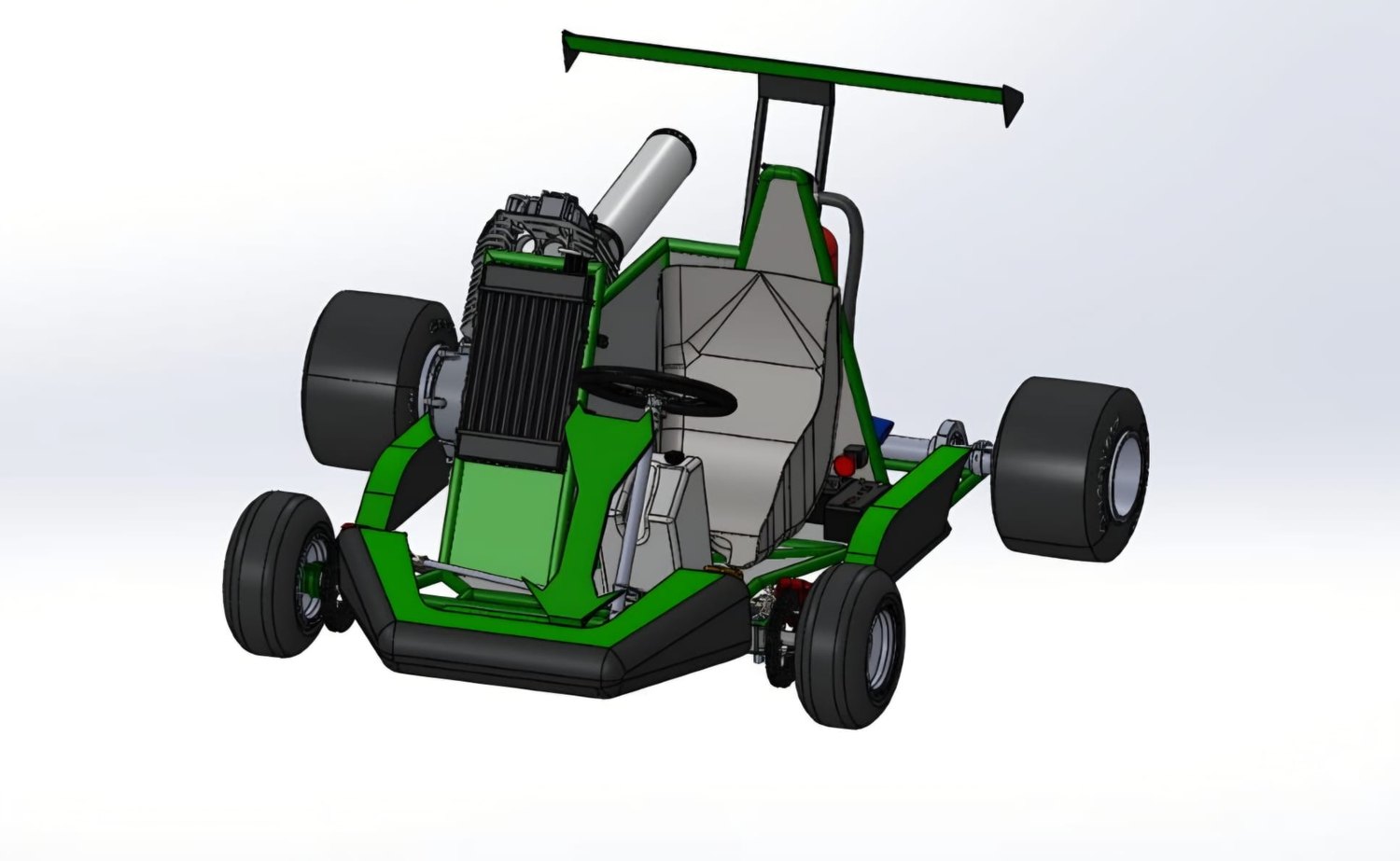
For the black and yellow car I did the full SolidWorks assembly - chassis, drivetrain, steering, seat and bodywork, and then worked on the build that came off that model. Taking my own CAD through to a running vehicle showed me quickly where a design is elegant on screen and awkward in the workshop.

Across the three builds the work covered producing and interpreting engineering drawings, manufacturing components with hand and power tools, assembling chassis, drivetrain and steering, and inspecting each finished car against race specification. Competition deadlines meant iterating fast and solving problems as a team.

SolidWorksFabricationChassis & drivetrainTeamworkMotorsport

I built a working 3D printer from first principles rather than from a kit - assembling the mechanical frame and motion system, wiring the electronics, and running it on an Arduino based control system.

Getting it printing reliably meant configuring the motion axes and firmware, calibrating the bed and extrusion, then troubleshooting and iterating on the design to improve print quality. It closes the full mechatronics loop: mechanical hardware, electronics and embedded software brought together into a machine that works.

ArduinoEmbedded controlMotion systemsCalibrationMechanical assembly
03 - Coursework

Applied engineering, on record.

Robotics · Control

Two Link Manipulator - Computed Torque Control

Derived the nonlinear dynamics of a two link planar manipulator using the Lagrangian formulation, then implemented computed torque control in MATLAB Simulink - holding critically damped, stable trajectory tracking even as payload variation more than tripled peak joint torque.

Deep Learning · Medical Imaging

Few-Shot Segmentation - Baseline vs Reptile

Benchmarked a supervised U-Net against Reptile meta learning for few shot MRI segmentation across 1/3/5-shot settings and five random seeds. Meta learning improved both accuracy and run-to-run stability on the primary task, while revealing where task difficulty outweighs algorithm choice.

Signal Processing · Instrumentation

Digital Signal Acquisition & Processing

Captured vibration and force data from bending, force sensitive and piezo sensors via Arduino and MATLAB, then applied FFT analysis, downsampling and a 4th order Butterworth filter - resolving a 5 Hz excitation to within 0.04 Hz and cleanly removing high-frequency noise.

Machine Learning · Aviation

Predicting Aircraft Taxi Times

Team study applying machine learning to real airport operations data. PCA reduced 24 features to 12, after which Linear Regression, a Neural Network and ANFIS were compared - the fuzzy neural ANFIS model proved most accurate, averaging roughly 3.5 minutes of error.

Instrumentation · Calibration

Multi-Sensor Characterisation & Calibration

Characterised ultrasonic, infrared and three axis accelerometer sensors on Arduino, averaging around 100 readings per reference point. Least squares and third order polynomial models cut ultrasonic error to millimetre level and accelerometer error to within 0.016 g.

04 — Capabilities

Design & Simulation

  • SolidWorks
  • AutoCAD
  • Ansys (CFD)
  • Mechanical design
  • Thermodynamics
  • Pneumatics

Software & Control

  • Python, C, C++
  • MATLAB & Simulink
  • Arduino
  • Siemens PLC
  • Embedded systems

Robotics, AI & Build

  • Machine learning
  • Computer vision
  • Autonomous & control systems
  • Fabrication & assembly
  • Sensors & calibration
  • Workshop & hand tools
05 — Education
EXPECTED 2026

MSc Robotics & Artificial Intelligence

Queen Mary University of London - London, UK
Advanced study of intelligent and autonomous systems, building on a mechanical and mechatronic foundation.
Modules: Robotics · Machine Learning · Computer Vision · Autonomous Systems · Digital Signal Processing
GRADUATED 2025

BE Mechatronics Engineering (AIML Minor)

Hindusthan College of Engineering and Technology - Coimbatore, India
First Class · CGPA 8.09 / 10
Core mechanical, electronic and control engineering, with a minor in Artificial Intelligence & Machine Learning — the bridge between my hardware background and my MSc.
Modules: Control Systems · Robotics · Embedded Systems · Automation · Mechanical Design · Electronics
COMPLETED 2022

Diploma in Mechanical Engineering

Lakshmi Ammal Polytechnic College - Kovilpatti, India
First Class with Distinction · 87%
The mechanical foundation of my engineering path - from core mechanics through to power systems.
Covered: Mechanics · Thermodynamics · Engines · Hybrid Power Generation
06 — Contact

Open to opportunities.

Seeking graduate engineering roles in aerospace, propulsion and mechanical design - based in London, available now.